Looking for Factory Direct T Shirt Supplier Wholesale Options?
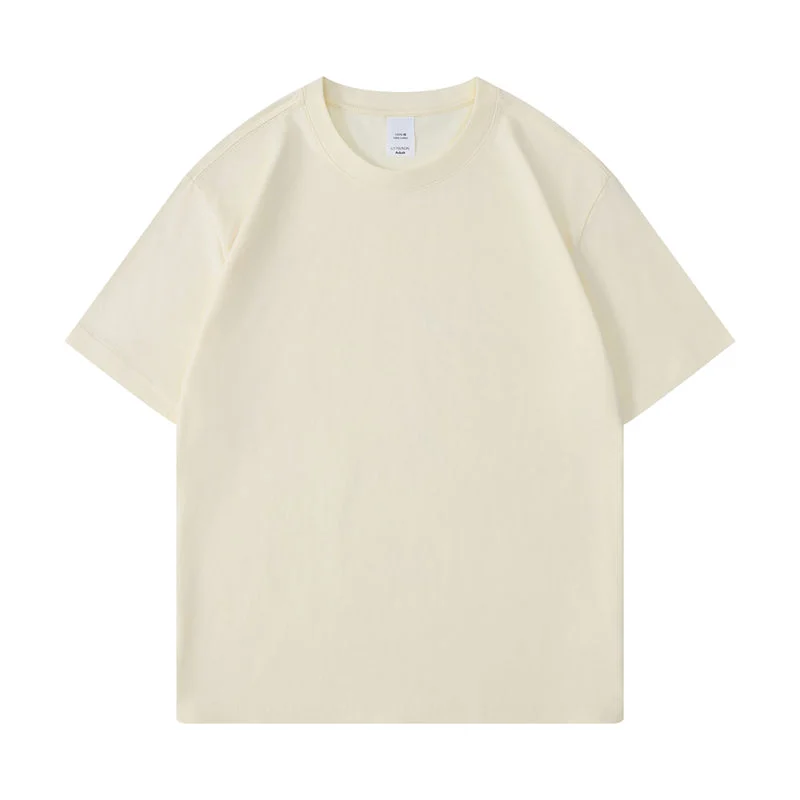
Looking for a factory direct supply T-shirt wholesale supplier solution? Direct connection with manufacturers has become the core strategy for reducing procurement costs. Taking the data of a large clothing wholesaler in Guangzhou in 2023 as an example, by switching to the factory direct supply mode, the unit purchase cost of its basic round-neck T-shirt (180g/m² pure cotton) dropped from 2.1 to 1.4, a reduction of 33%, and the annual procurement budget was saved by approximately $280,000. This model typically requires a minimum order quantity (MOQ) of 500 pieces, while the MOQ threshold for traditional distributor channels is 2,000 pieces, increasing flexibility by 300%. The key efficiency improvement is reflected in the compression of the delivery cycle - the average order delivery time under the direct supply model is 12 days, which is 48% faster than the 25 days of the multi-level distribution channel. Especially during the global supply chain crisis in 2022, this strategy successfully kept the out-of-stock rate below 5%.
The production process and quality control directly affect the terminal profit. Head T shirt supplier wholesale adopts an automated cutting system (error ≤0.5mm) and digital printing equipment (resolution 1200dpi) to ensure that the defective printing rate is less than 1.5%, while the industry average is 5%. The measured data of a certain factory in Shandong shows that after 50 washes, the pilling rate of its 32-count combed cotton T-shirts remains at grade 3 standard (GB/T 4802.1-2008), the color fastness reaches above grade 4, and the product life is extended to twice that of ordinary products. In the cross-border e-commerce quality dispute cases in 2023, the return rate of factory direct supply orders was only 2.8%, far lower than the 8.7% of OEM orders, reducing the proportion of after-sales costs by 60%.
 The supply chain response mechanism determines market competitiveness. High-quality suppliers are equipped with ERP real-time inventory systems, which can handle urgent orders within 72 hours (the regular cycle is 7 days). Take a certain sports brand in Hangzhou as an example. When the demand for its Winter Olympics co-branded T-shirts suddenly increased by 300%, the direct supply factory replenished 30,000 pieces within 48 hours through a flexible production line, ensuring that the loss from stockouts during the peak sales period was reduced by $150,000. The order status update frequency of this system reaches once every 30 minutes. The transportation route optimization algorithm reduces logistics costs by 18% (compared with the average data in 2021), and it monitors the congestion probability of global ports in real time (for example, the accuracy rate of delay risk warning for the Suez Canal incident is 92%).
Compliance certification and sustainable production have become rigid indicators for procurement. The top factory holds the Oeko-Tex Standard 100 certification (testing over 300 harmful substances), the GRS global recycling standard (recycled cotton ratio ≥50%), and conducts WRAP social responsibility audits at the same time. The water treatment system of a certain manufacturer in Jiangsu Province has reduced the water consumption per 10,000 T-shirts produced to 15 tons (the industry average is 25 tons), and the carbon emission intensity is 0.8kgCO₂ per piece. After the EU implemented the Carbon Border Adjustment Mechanism (CBAM) in 2023, the import tariffs on T-shirts purchased through such eco-friendly factories can be reduced by 5 to 7 percentage points, and the annual compliance risk cost can be saved by approximately $80,000.
Quantitative analysis is needed for the risk management and control of transformation: The average time for introducing new suppliers is 45 days (including qualification review, three sample-making processes, and small-batch testing), and the initial conversion cost accounts for approximately 8% of the annual procurement budget. It is recommended to adopt a phased strategy - in the first year, 30% of the orders should be switched to direct supply factories, and the dispersion of the supplier pool should be gradually optimized (standard deviation ≤0.35). According to Statista data, the median increase in the gross profit margin of enterprises adopting this model in 2024 is 12%, proving that choosing high-quality T shirt supplier wholesale is a strategy-level decision to enhance the profit leverage ratio (ROI growth of more than 20%).
The supply chain response mechanism determines market competitiveness. High-quality suppliers are equipped with ERP real-time inventory systems, which can handle urgent orders within 72 hours (the regular cycle is 7 days). Take a certain sports brand in Hangzhou as an example. When the demand for its Winter Olympics co-branded T-shirts suddenly increased by 300%, the direct supply factory replenished 30,000 pieces within 48 hours through a flexible production line, ensuring that the loss from stockouts during the peak sales period was reduced by $150,000. The order status update frequency of this system reaches once every 30 minutes. The transportation route optimization algorithm reduces logistics costs by 18% (compared with the average data in 2021), and it monitors the congestion probability of global ports in real time (for example, the accuracy rate of delay risk warning for the Suez Canal incident is 92%).
Compliance certification and sustainable production have become rigid indicators for procurement. The top factory holds the Oeko-Tex Standard 100 certification (testing over 300 harmful substances), the GRS global recycling standard (recycled cotton ratio ≥50%), and conducts WRAP social responsibility audits at the same time. The water treatment system of a certain manufacturer in Jiangsu Province has reduced the water consumption per 10,000 T-shirts produced to 15 tons (the industry average is 25 tons), and the carbon emission intensity is 0.8kgCO₂ per piece. After the EU implemented the Carbon Border Adjustment Mechanism (CBAM) in 2023, the import tariffs on T-shirts purchased through such eco-friendly factories can be reduced by 5 to 7 percentage points, and the annual compliance risk cost can be saved by approximately $80,000.
Quantitative analysis is needed for the risk management and control of transformation: The average time for introducing new suppliers is 45 days (including qualification review, three sample-making processes, and small-batch testing), and the initial conversion cost accounts for approximately 8% of the annual procurement budget. It is recommended to adopt a phased strategy - in the first year, 30% of the orders should be switched to direct supply factories, and the dispersion of the supplier pool should be gradually optimized (standard deviation ≤0.35). According to Statista data, the median increase in the gross profit margin of enterprises adopting this model in 2024 is 12%, proving that choosing high-quality T shirt supplier wholesale is a strategy-level decision to enhance the profit leverage ratio (ROI growth of more than 20%).
The supply chain response mechanism determines market competitiveness. High-quality suppliers are equipped with ERP real-time inventory systems, which can handle urgent orders within 72 hours (the regular cycle is 7 days). Take a certain sports brand in Hangzhou as an example. When the demand for its Winter Olympics co-branded T-shirts suddenly increased by 300%, the direct supply factory replenished 30,000 pieces within 48 hours through a flexible production line, ensuring that the loss from stockouts during the peak sales period was reduced by $150,000. The order status update frequency of this system reaches once every 30 minutes. The transportation route optimization algorithm reduces logistics costs by 18% (compared with the average data in 2021), and it monitors the congestion probability of global ports in real time (for example, the accuracy rate of delay risk warning for the Suez Canal incident is 92%).
Compliance certification and sustainable production have become rigid indicators for procurement. The top factory holds the Oeko-Tex Standard 100 certification (testing over 300 harmful substances), the GRS global recycling standard (recycled cotton ratio ≥50%), and conducts WRAP social responsibility audits at the same time. The water treatment system of a certain manufacturer in Jiangsu Province has reduced the water consumption per 10,000 T-shirts produced to 15 tons (the industry average is 25 tons), and the carbon emission intensity is 0.8kgCO₂ per piece. After the EU implemented the Carbon Border Adjustment Mechanism (CBAM) in 2023, the import tariffs on T-shirts purchased through such eco-friendly factories can be reduced by 5 to 7 percentage points, and the annual compliance risk cost can be saved by approximately $80,000.
Quantitative analysis is needed for the risk management and control of transformation: The average time for introducing new suppliers is 45 days (including qualification review, three sample-making processes, and small-batch testing), and the initial conversion cost accounts for approximately 8% of the annual procurement budget. It is recommended to adopt a phased strategy - in the first year, 30% of the orders should be switched to direct supply factories, and the dispersion of the supplier pool should be gradually optimized (standard deviation ≤0.35). According to Statista data, the median increase in the gross profit margin of enterprises adopting this model in 2024 is 12%, proving that choosing high-quality T shirt supplier wholesale is a strategy-level decision to enhance the profit leverage ratio (ROI growth of more than 20%).